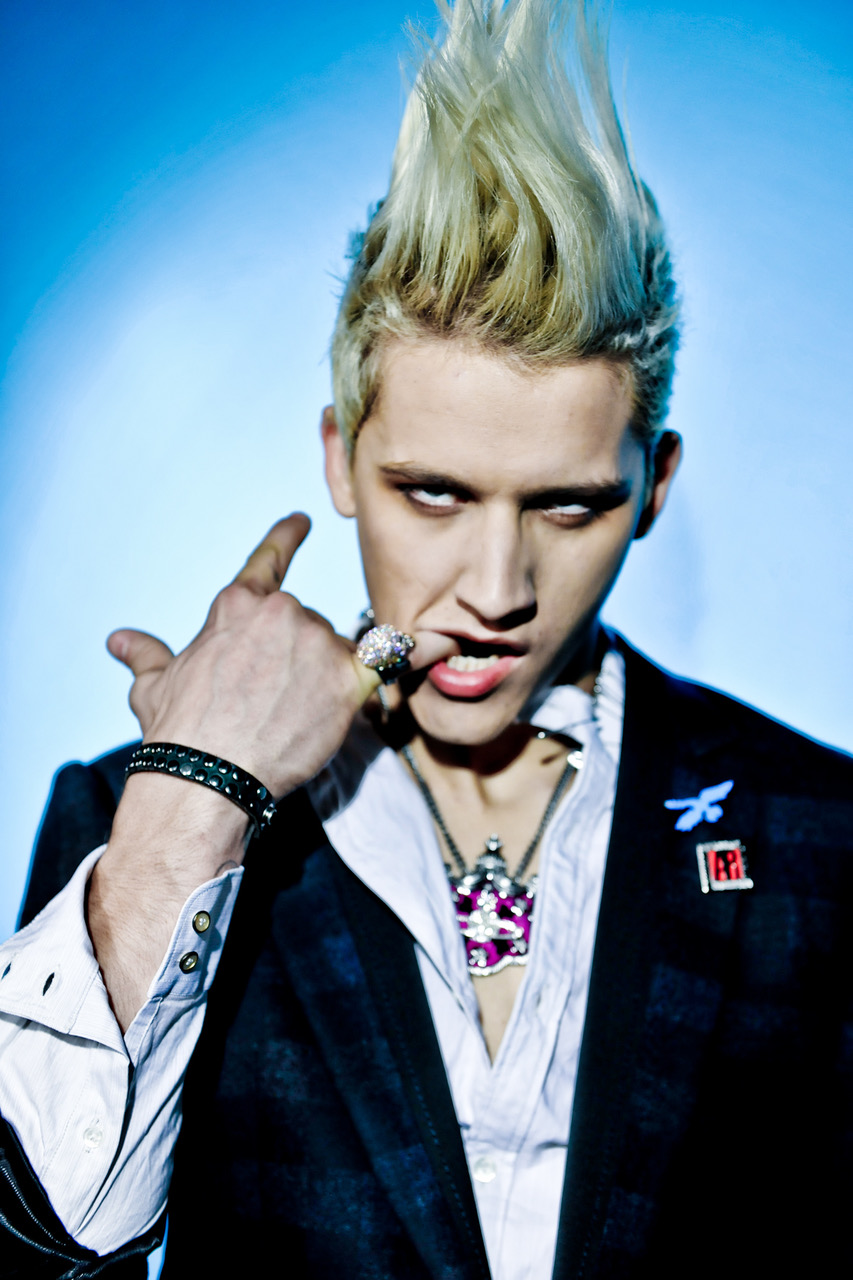
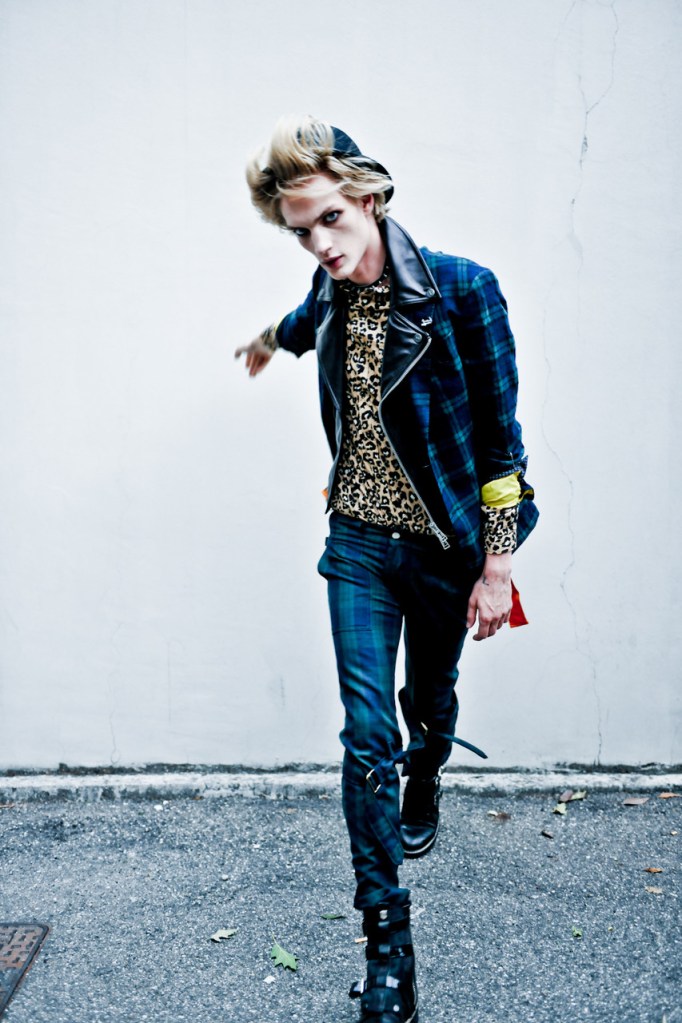
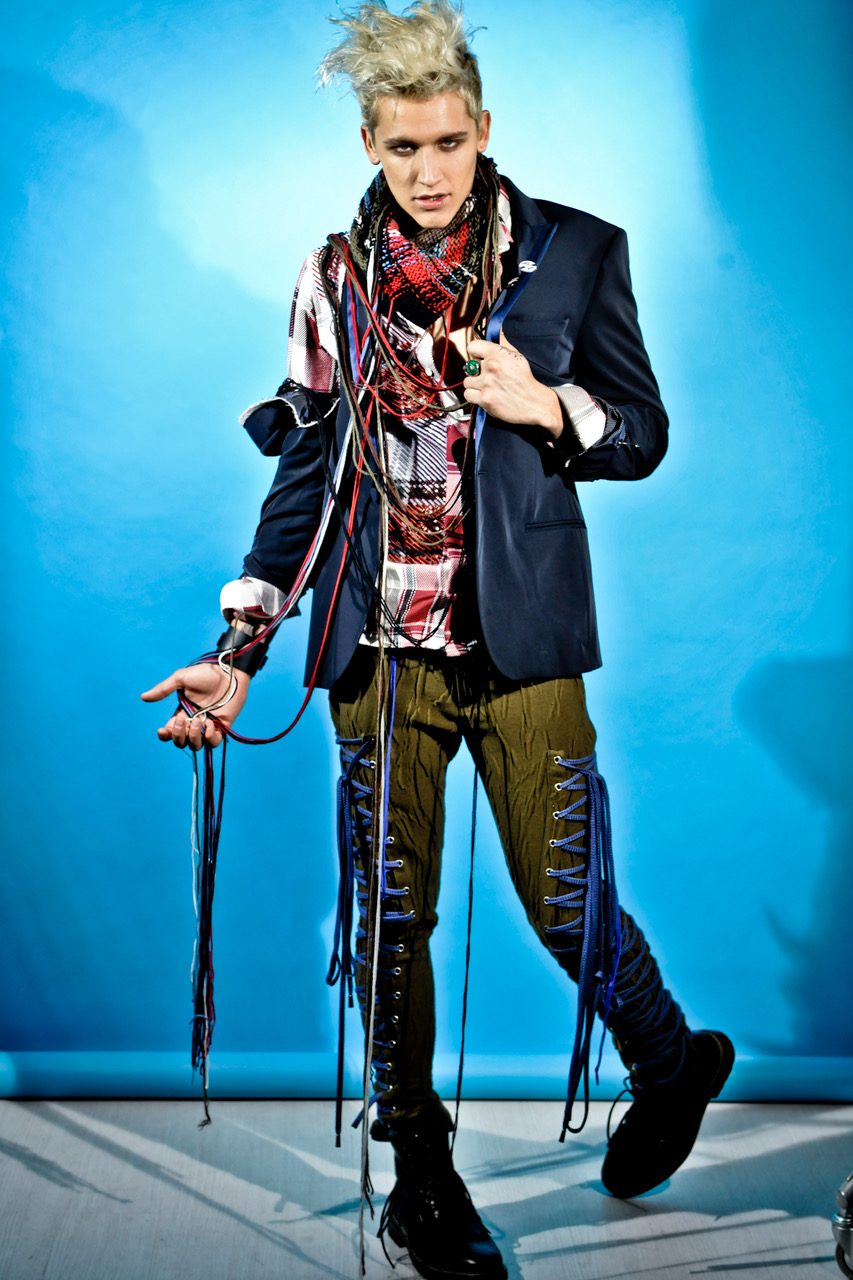
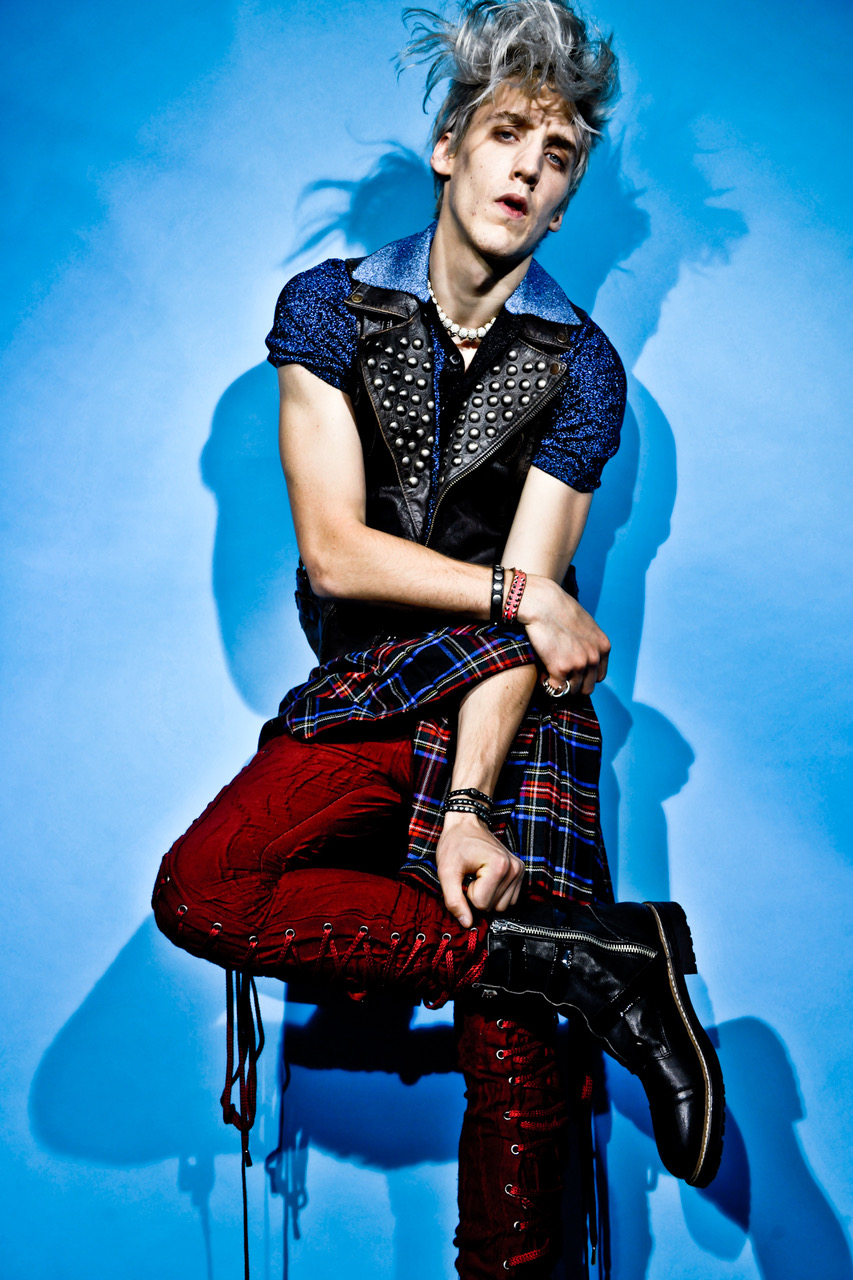
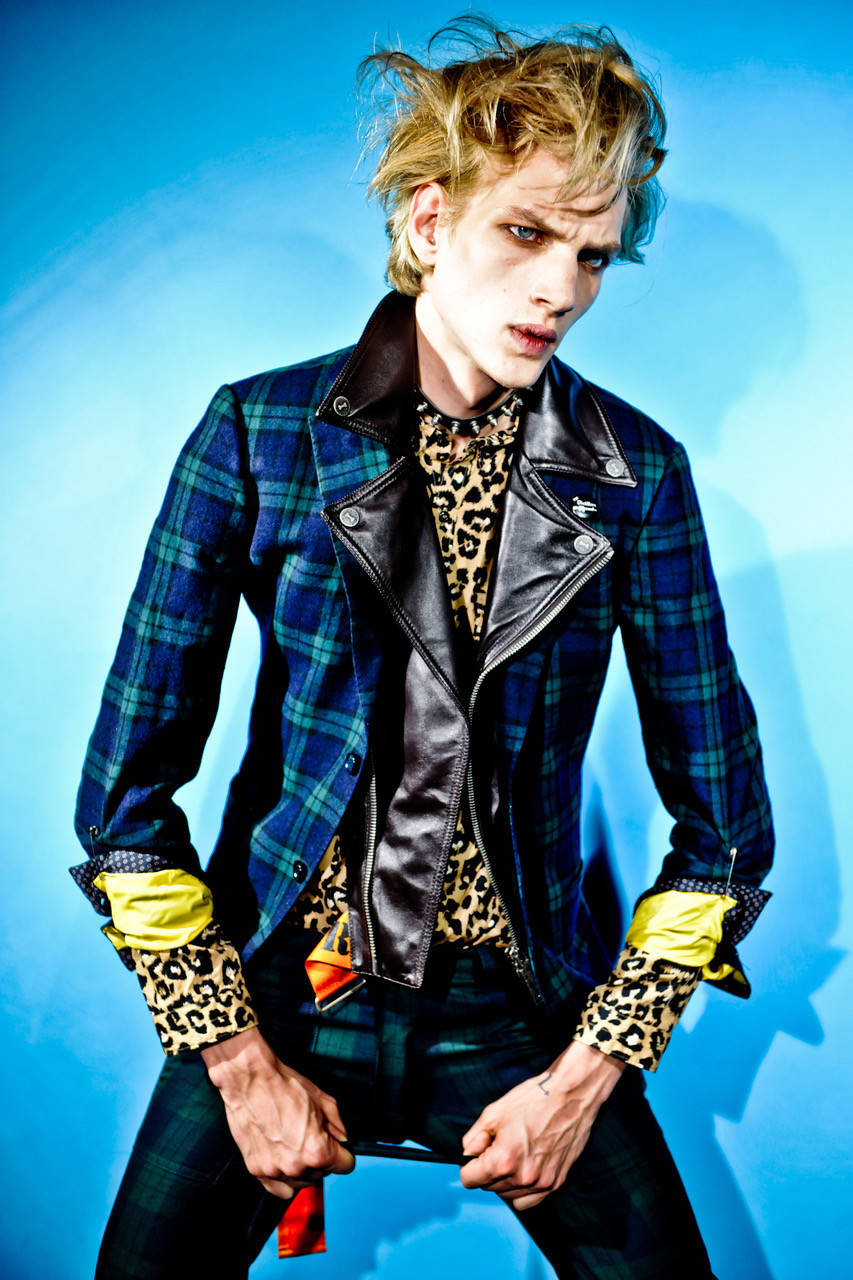
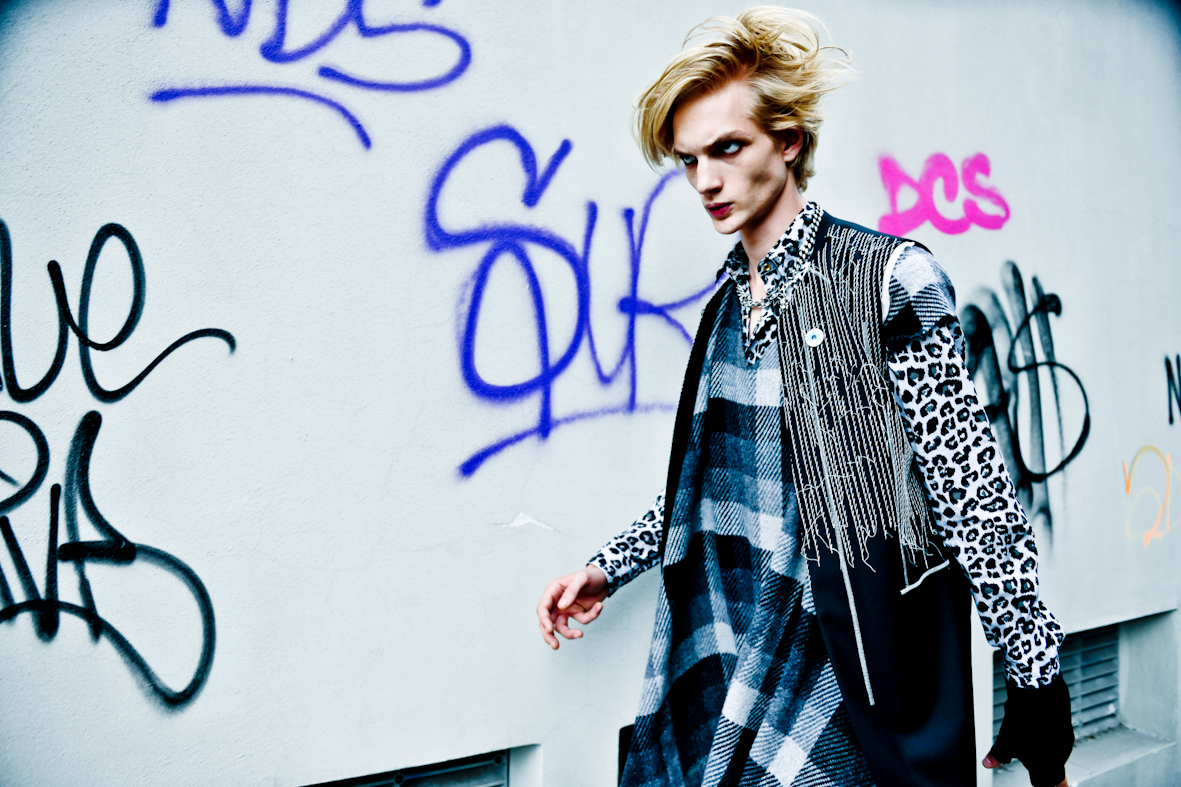
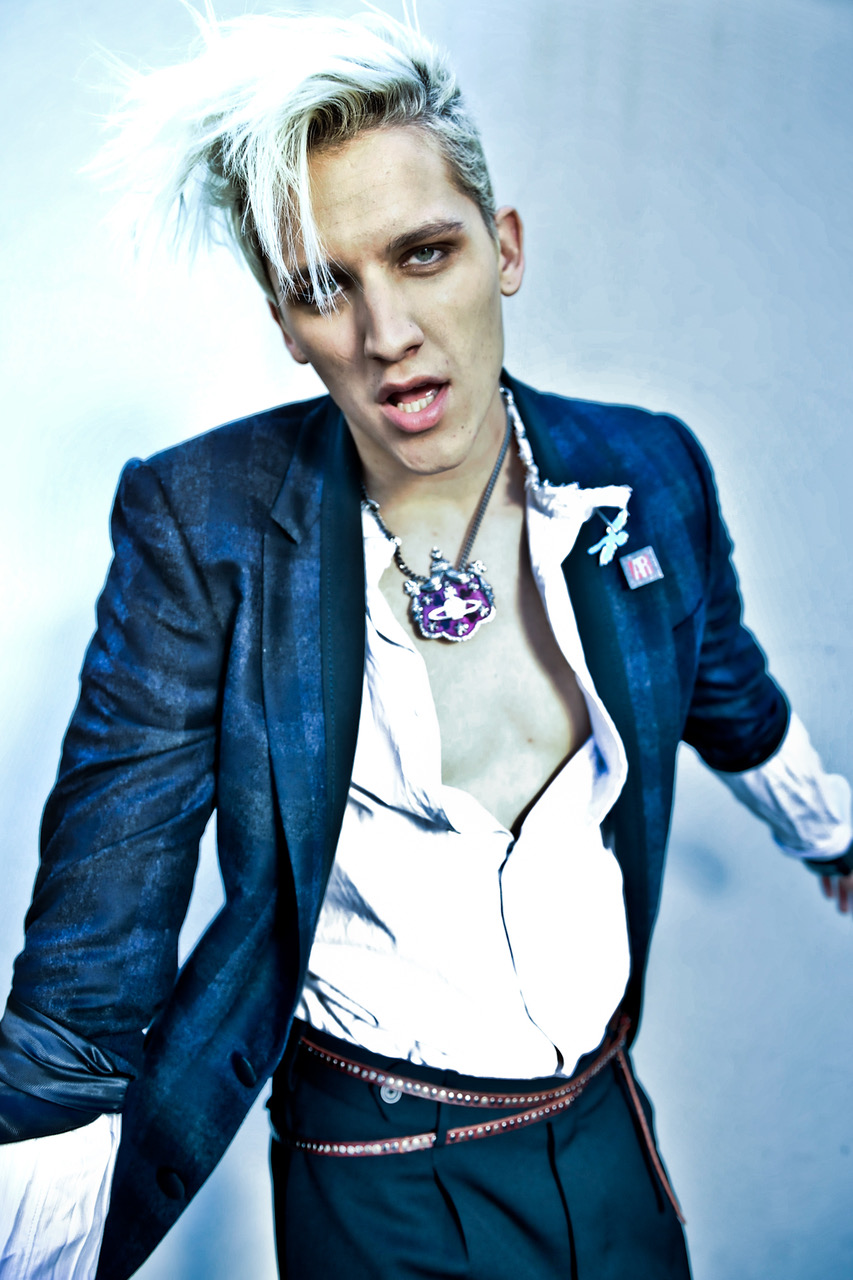
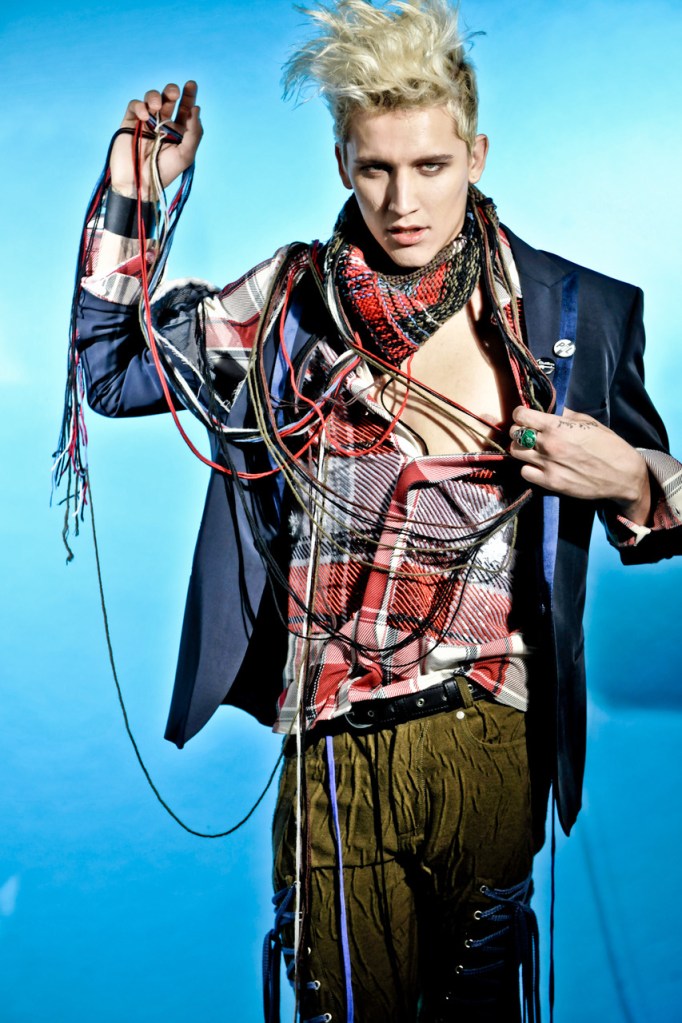
Models: Leebo Freeman, Vince Robitaille, Paul Boche
“Punk reproduced the entire sartorial history of post-war working-class youth cultures in ‘cut up’ form, combining elements which had originally belonged to completely different epochs. There was a chaos of quiffs and leather jackets, brothel creepers and winkle pickers, plimsolls and paka macs, moddy crops and skinhead strides, drainpipes and vivid socks, bum freezers and bovver boots – all kept ‘in place’ and ‘out of time’ by the spectacular adhesives: the safety pins and plastic clothes pegs, the bondage straps and bits of string which attracted so much horrified and fascinated attention”
Subculture Dick Hebdige
“It is conventional to call ‘monster’ any blending of dissonant elements…. I call ‘monster’ every original, inexhaustible beauty.” (Alfred Jarry)
“The subcultural bricoleur, like the ‘author’ of a surrealist collage, typically ‘juxtaposes two apparently incompatible realities (i.e. “flag”: “jacket”; “hole”: “teeshirt”; “comb: weapon”) on an apparently unsuitable scale … and … it is there that the explosive junction occurs’ (Ernst, 1948). Punk exemplifies most clearly the subcultural uses of these anarchic modes. It too attempted through ‘perturbation and deformation’ to disrupt and reorganize meaning. It, too, sought the ‘explosive junction’.” Subculture Dick Hebdige
“REVOLUTION CEASES TO BE THE MOMENT IT BECOMES NECESSARY TO BE SACRIFICED FOR IT IT IS FORBIDDEN TO FORBID NEITHER GODS NOR MASTERS DOWN WITH THE ABSTRACT, LONG LIVE THE EPHEMERAL AFTER GOD, ART IS DEAD DOWN WITH A WORLD WHERE THE GUARANTEE THAT WE WON’T DIE OF STARVATION HAS BEEN PURCHASED WITH THE GUARANTEE THAT WE WILL DIE OF BOREDOM CLUB MED, A CHEAP HOLIDAY IN OTHER PEOPLE’S MISERY DON’T CHANGE EMPLOYERS, CHANGE THE EMPLOYMENT OF LIFE NEVER WORK CHANCE MUST BE SYSTEMATICALLY EXPLORED RUN, COMRADE, THE OLD WORLD IS BEHIND YOU BE CRUEL THE MORE YOU CONSUME THE LESS YOU LIVE LIVE WITHOUT DEAD TIME, INDULGE UNTRAMMELED DESIRE PEOPLE WHO TALK ABOUT REVOLUTION AND CLASS STRUGGLE WITHOUT REFERRING EXPLICITLY TO EVERYDAY LIFE, WITHOUT UNDERSTANDING WHAT IS SUBVERSIVE ABOUT LOVE AND POSITIVE ABOUT THE REFUSAL OF CONSTRAINTS, HAVE CORPSES IN THEIR MOUTHS UNDER THE PAVING STONES, THE BEACH!”
May ’68 slogans from Lipstick Traces Greil Marcus
“I’ve been pondering Malcolm and Vivienne’s new venture. Does being shopkeepers square with the revolution? I decide they may need advice and criticism. Stylishly presented, enigmatically delivered. I spend an afternoon in Westminster Reference Library looking up critical definitions and quotations about ‘fashion’. Over the next three days I send several postcards of London to the shop, inscribed with mottoes: ‘Craft must have clothes, but truth loves to go naked’, ‘Must passion end in fashion?’ and so on. On the afternoon of the fourth day I visit the shop. Malcolm is inside with an assistant, putting finishing touches to three foam-filled letters covered in fluorescent pink plastic: ‘S’ ‘E’ ‘X’. This is to be the new shop sign. I am press-ganged into helping erect it. We watch the astonishment of passers-by with satisfaction. Malcolm confirms having received the postcards. But unfortunately the post office delivered them all together. He says this marred the effect. Not long after, he spray-paints some of my messages over the shop interior. Several also turn up on SEX T-shirts. I’m not sure if that’s what I meant.”
Vivienne Westwood: fashion, perversity, and the sixties laid bare Fred Vermorel
“Punk claimed to speak for the neglected constituency of white lumpen youth, but it did so typically in the stilted language of glam and glitter rock – ‘rendering’ working classness metaphorically in chains and hollow cheeks, ‘dirty’ clothing (stained jackets, tarty see-through blouses) and rough and ready diction. Resorting to parody, the blank generation, ‘classified null by society’ (Richard Hell, New Musical Express, 29 October 1977) described itself in bondage through an assortment of darkly comic signifiers – straps and chains, strait jackets and rigid postures. Despite its proletarian accents, punk’s rhetoric was steeped in irony.” Subculture Dick Hebdige
“The punk movement – it was just a fashion that became a marketing opportunity for people,’ the fashion designer Vivienne Westwood told the Guardian in 2011. ‘It’s great nowadays to see young people dressed as a punk, because it’s entered into the iconography of “I am a rebel, and that’s what I look like if I want to be that kind of rebel”, but for somebody my age to think it’s got any credibility in any way – no, it hasn’t – it’s just an excuse for people to run around, without thought.’ ”










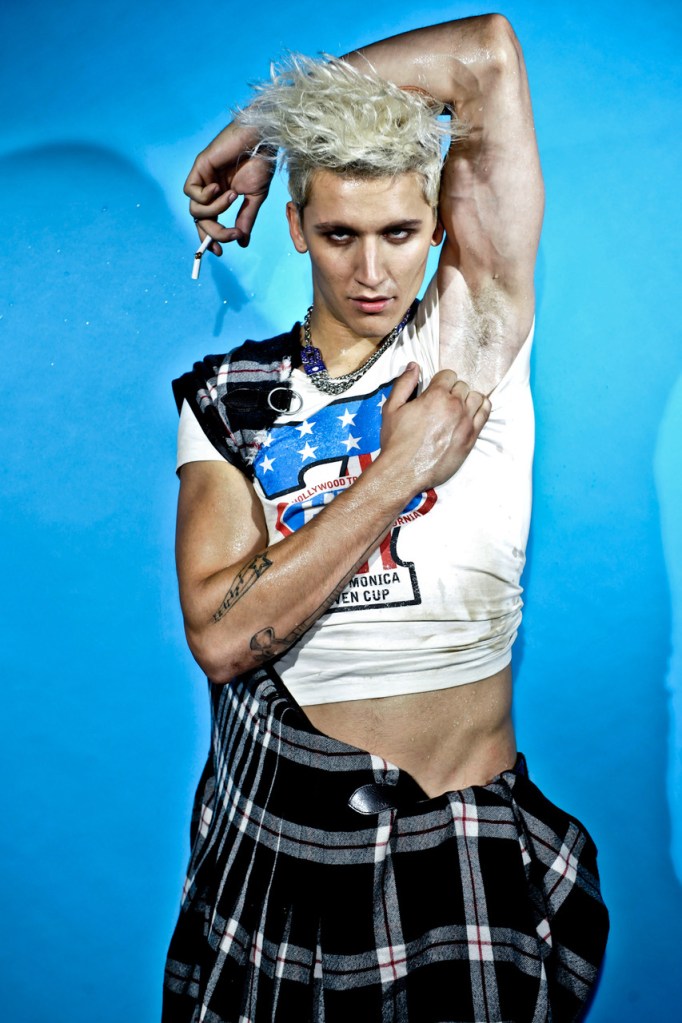

 REJECTS