
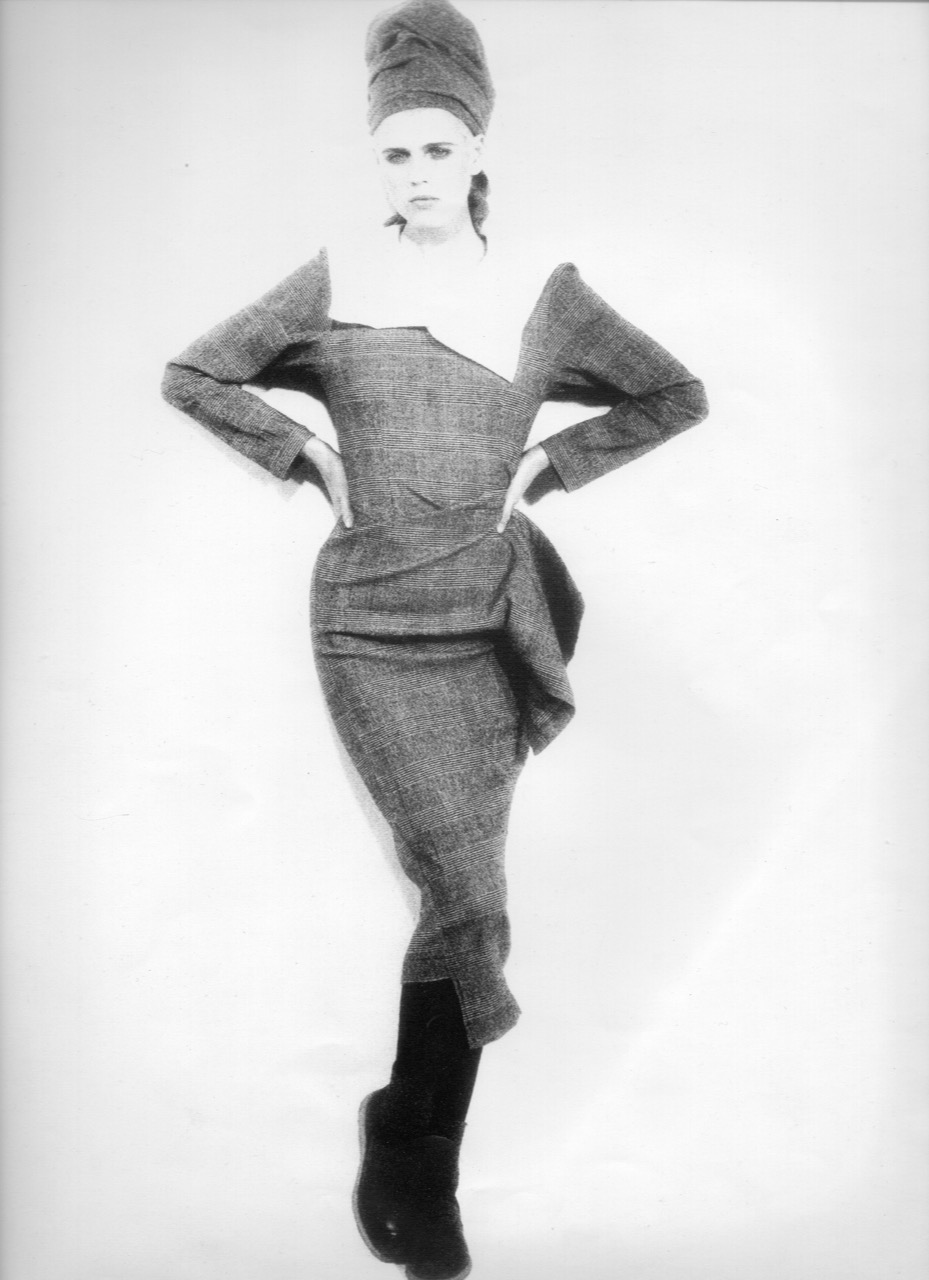
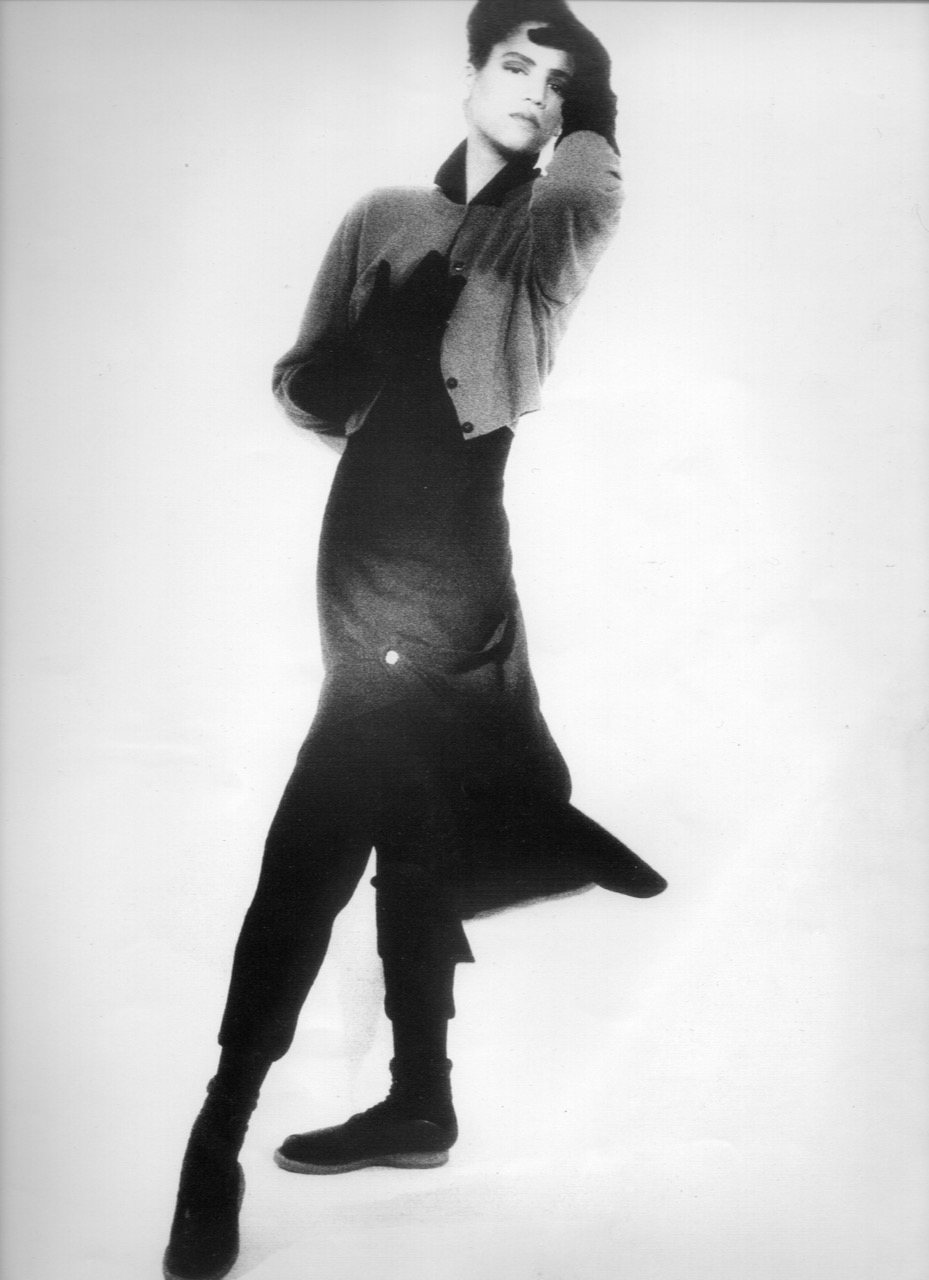
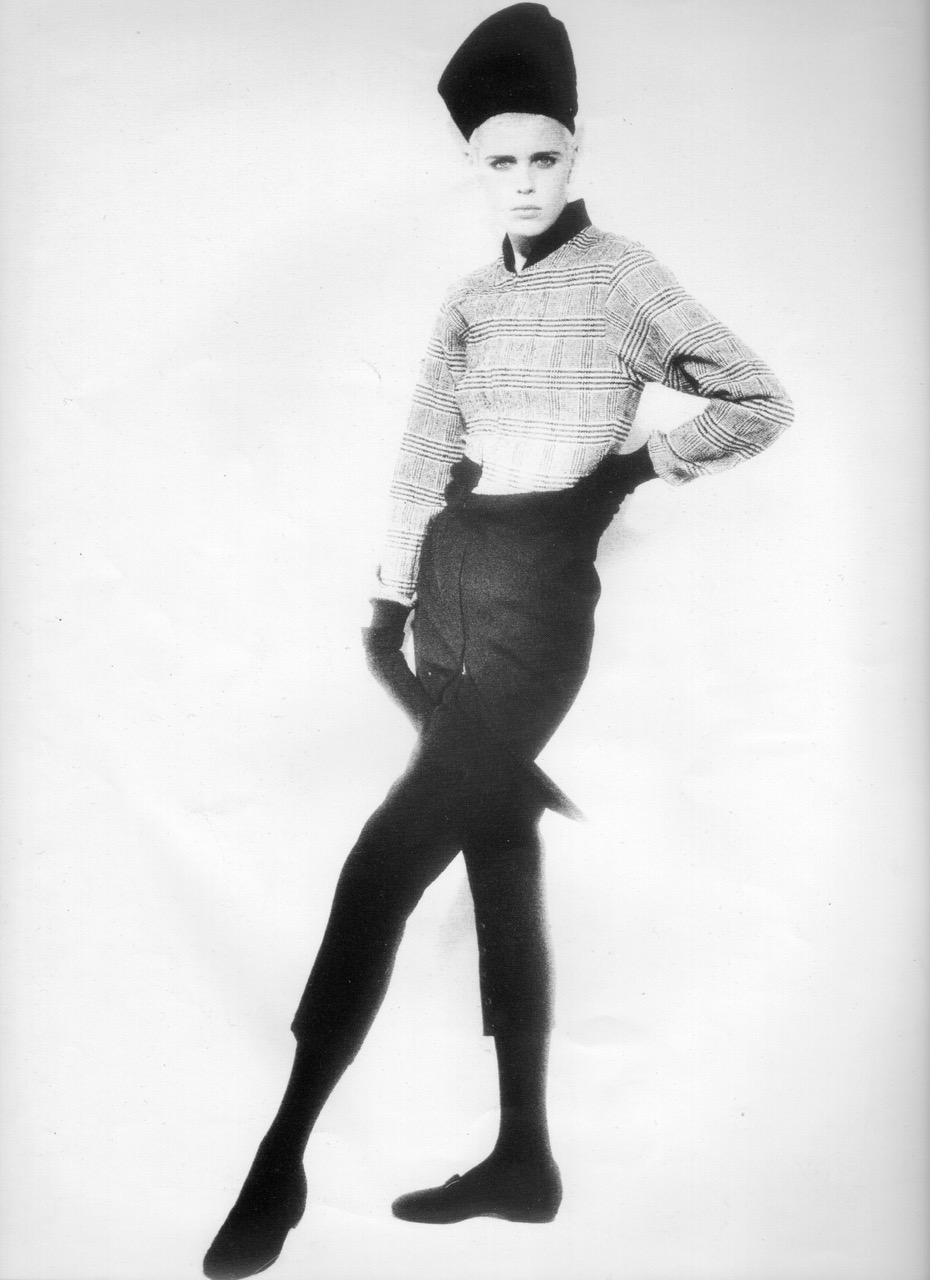
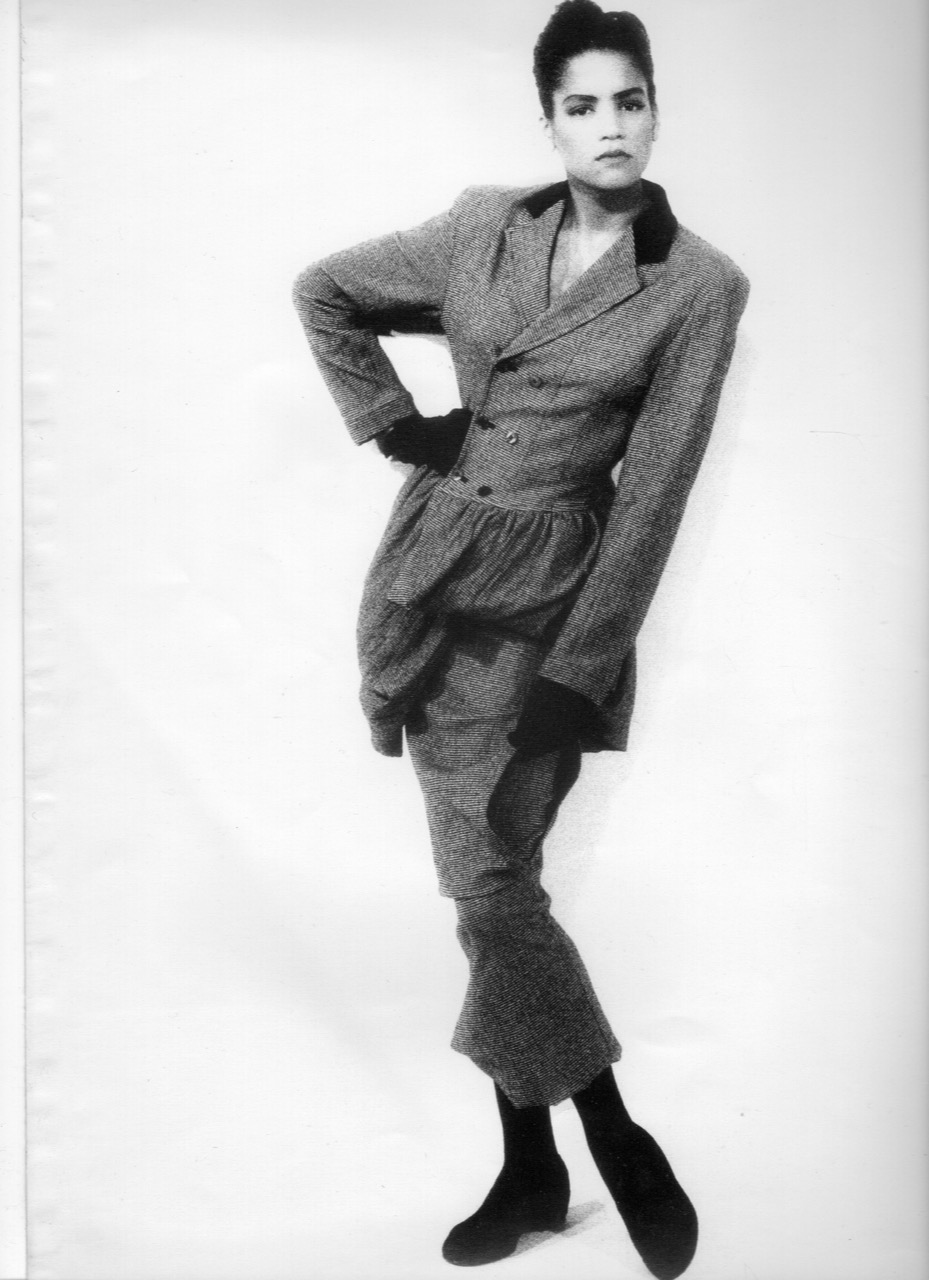
Photographer Peter Lindbergh
Coiffeur Julien
Make Up Stephane Marais
Models Veronica Webb Jeny Howorth
Shot in Paris 11th April 1986
‘My clothes are for women to wear today.” Rei Kawakubo once explained, and while she and Yamamoto drew heavily upon traditional Japanese design aesthetics, they were decidedly unconcerned with the western concept of elegance in their creations. Kawakubo and Yamamoto’s garments were instead intended for modern living and much of their success was attributed to their ability to strike the perfect balance between the traditions of their native culture and what the New York Times called the “aggressive tempo of modern times.” (Dorsey, 1982: C7). This is the meaning behind Kawakubo’s assertion that her designs were for the woman “who is independent … who can stand by herself” (Morris, “From Japan…,” 1982: C10). Ironically, in their ability to transcend long-held notions of “elegant fashion,” Kawakubo and Yamamoto’s design strategies cast a new definition of beauty, one based on strength and independence. Reviewing Yamamoto’s 1982 Fall/Winter collection John Duka wrote: “Mr. Yamamoto has combined some of the oldest and newest fashion ideas into the dazzling personal vision of the contemporary woman. And what she looks like is a distillation of the street fashions that began to pour westward from London in 1976 mixed with a few shapes from ancient Japan” (1982: C8).’
When the West Wore East: Rei Kawakubo, Yohji Yamamoto and The Rise of the Japanese Avant-Garde in Fashion
Melissa Marra-Alvarez
As part of a broader project about archives born from personal frustrations with the current state of fashion and a cultural shift that appears to have transformed the ‘kooky’ second hand bargain into a research tool and fashion holy grail, I have decided to dig up a little rusty treasure from my own personal, and very badly kept, archive. I don’t remember where I bought, or obtained, Comme’s Fall Winter 1986 catalogue, I know I used it in my first year at Marangoni as a basis for drawing my sketches, it’s bigger than usual and printed on a single folded sheet, so it has seen much better days, it had seen better days in 1987 truth be told, so you can only imagine how pristine it is now. Nevertheless I attempted to scan it in my smallish scanner, and preserve this archival fashion artifact before it falls to pieces once and for all for posterity, and you guys. You’re welcome.


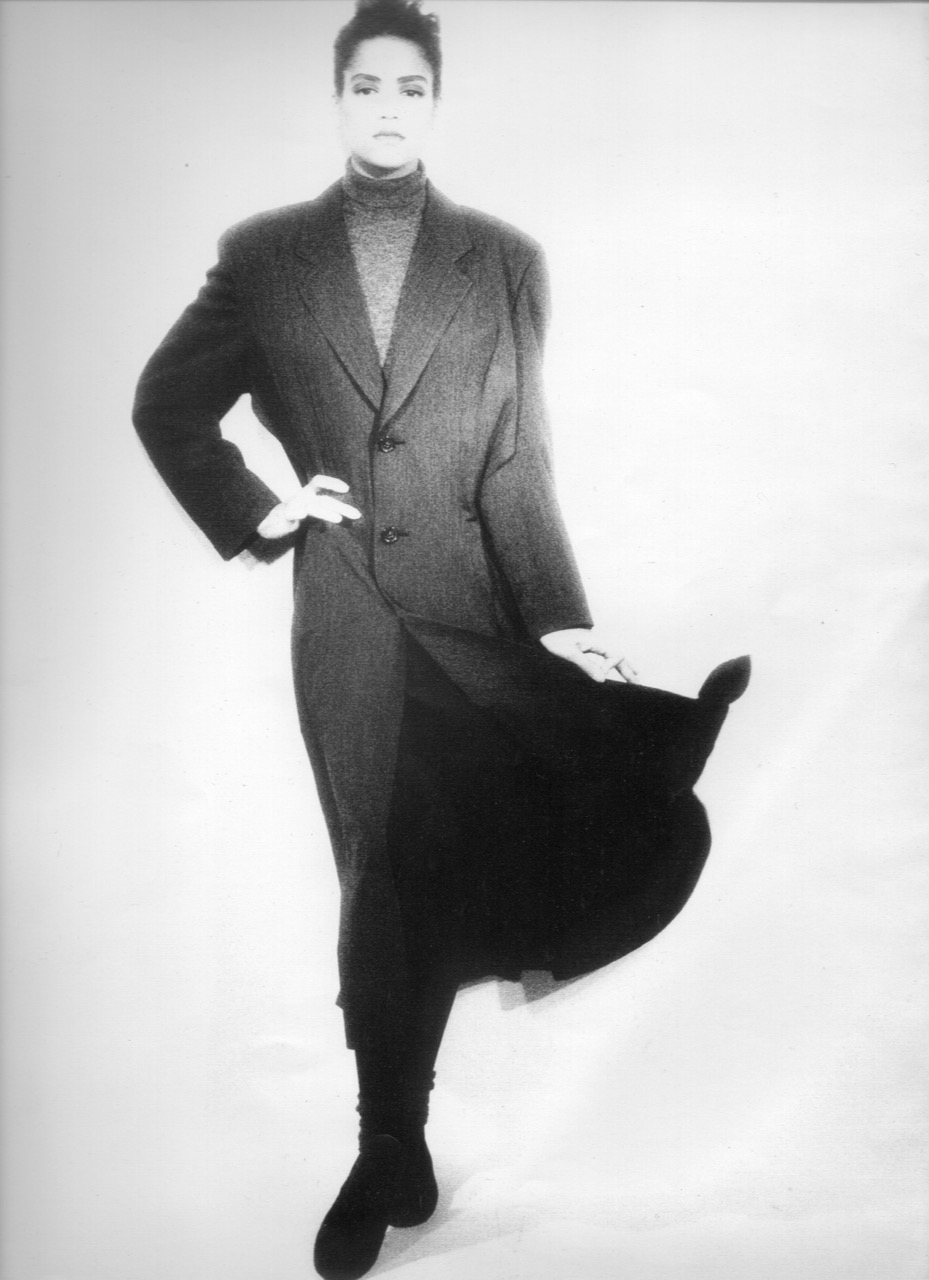

The driving force in Kawakubo’s career in fashion was innovation, “to do things that [had] never been done before, things with a strong image” (Morris, “From Japan…,” 1982:C10). Inevitably this artistic philosophy gained a measure of positive acknowledgement from the western public, as some were taken by the intricate construction and intellectual approach to design evident in her garments. What may have initially appeared to be a ragged look was upon closer inspection the result of a calculated design choice.
When the West Wore East: Rei Kawakubo, Yohji Yamamoto and The Rise of the Japanese Avant-Garde in Fashion
Melissa Marra-Alvarez


 REJECTS